
What is Shia Islam: Introduction
What is Shia Islam: Introduction
Shia Islam is one of the two major branches of the Muslim community. At its heart it is a lived religious tradition anchored in the same fundamental sources as all Muslims — belief in the One God (Tawḥīd), reverence for the Prophet Muḥammad (peace be upon him and his family), the Qurʼān, and the practice of worship and moral accountability — while also carrying a distinctive spiritual, theological and historical vision built around the leadership and example of the Ahl al-Bayt (the People of the House). This page explains Shia belief and practice in depth, and explores why devotion to the Ahl al-Bayt is central to Shia identity, spirituality and ethics.
Origins & Historical Context:
Shia identity emerges from a particular reading of the earliest years after the Prophet Muḥammad’s death in 632 CE. From the Shia perspective, the Prophet’s leadership did not end with his passing; rather, he entrusted spiritual and communal guidance to members of his household — foremost among them ʿAlī ibn Abī Ṭālib, his cousin and son-in-law, and his daughter Fāṭimah. Shia Muslims understand important events — such as the Prophet’s sermon at Ghadīr Khumm, and, later, the tragedy of Karbalā (the martyrdom of Ḥusayn ibn ʿAlī in 680 CE) — as decisive moments that shaped the community’s understanding of spiritual authority, moral responsibility, and what it means to stand against injustice.
These historical touchstones are not merely dates; they are living memory, shaping Shia devotion, ethics, and practices. The story of Ḥusayn’s stand at Karbalā is read as a universal lesson about resisting oppression and upholding human dignity — values that continue to inspire Shia communities around the world.
Core Beliefs(A concise overview):
Tawḥīd (Oneness of God): Absolute monotheism — God is One, unique, and the sole object of worship.
Nubuwwah (Prophethood): Prophets, culminating in the Prophet Muḥammad, are chosen by God to teach and guide humanity.
Imāmah (Leadership): A defining Shia belief is that spiritual and communal leadership after the Prophet resides in the Imams — divinely guided leaders from the Prophet’s family. In many Shia traditions (especially Twelver Shia) Imams are seen as preservers and interpreters of religious truth.
The Qurʼān and the Sunnah: The Qurʼān is the supreme text. The Sunnah (practice and sayings of the Prophet) is filtered through accepted transmissions, including those preserved by and through the Ahl al-Bayt.
Resurrection and Divine Justice: Belief in life after death and in accountability. Divine justice (ʿadl) is a critical theological principle in many Shia schools.
Role of Reason: Alongside revelation, reason (aql) plays an important role in understanding faith and law — Shia scholarly tradition places emphasis on careful reasoning and interpretation.
Who Are the Ahl Al-Bayt & why we love them:
Ahl al-Bayt literally means “the People of the House” — the family of the Prophet. For Shia Muslims the Ahl al-Bayt are not simply respected relatives; they are the living embodiment of the Prophet’s spiritual and ethical legacy. This includes the Prophet Muhammad, Fāṭimah, ʿAlī, their descendants (including al-Ḥasan and al-Ḥusayn) and the line of Imams recognized in each Shia tradition.
Why this love matters:
Spiritual Guidance: The Ahl al-Bayt are seen as guides whose lives exemplify the highest ethical and spiritual ideals. Their teachings, sermons, and example are studied not only as historical records but as sources of spiritual formation.
Moral Courage: Stories from the lives of the Ahl al-Bayt — especially the sacrifice of Imam Ḥusayn at Karbalā — provide a powerful moral language for confronting tyranny and standing with the oppressed.
Emotional and Ritual Connection: Love for the Ahl al-Bayt finds expression in rituals (majālis — gatherings of remembrance), in supplications and ziyārāt (visitation prayers), and in poetry and art. These practices cultivate devotion, reflection, and communal solidarity.
Interpreting Scripture and Practice: For many Shia, authentic interpretation of the Qurʼān and the Prophet’s example is inseparable from the teachings preserved and transmitted by the Ahl al-Bayt.
This devotion is not merely historical nostalgia; it is a living relationship that shapes ethics, theology, and daily life.
Worship, Rituals & Communal Life:
Shia practice includes the core acts of Islamic worship shared with Muslims globally — prayer (ṣalāh), fasting (ṣawm), zakāt (charitable obligation) and hajj (pilgrimage) — while also having distinct emphases and rituals that spring from the centrality of the Ahl al-Bayt.
Prayer and Ritual Life: Shia Muslims perform the five daily prayers, often permitted to combine certain prayers in practice. Prayer is both communal and intimate — a time for direct communion with God and for remembering the Prophet and the Imams.
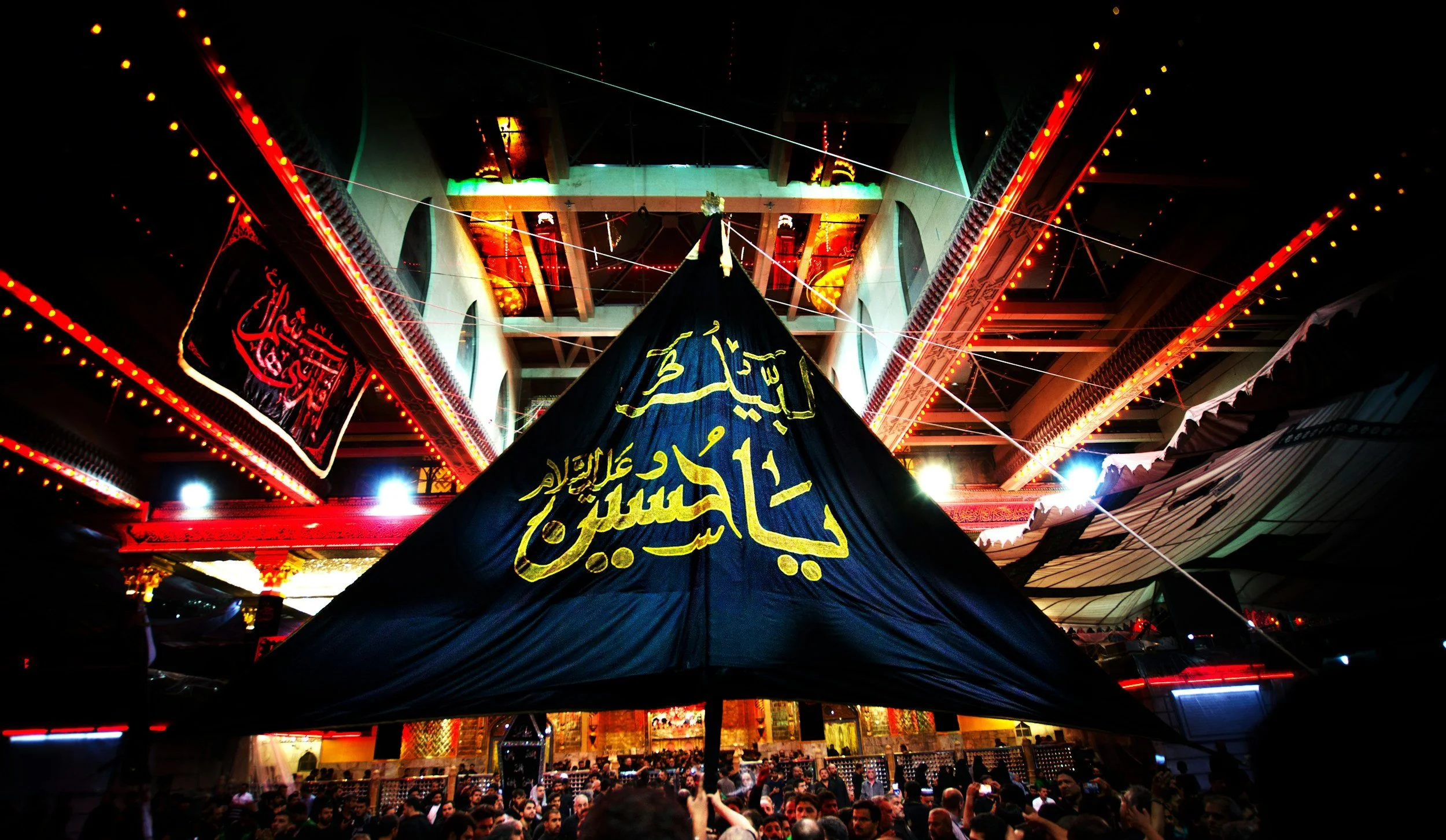
Muḥarram, Ashura and Arbaʿīn: The month of Muḥarram and the day of Ashura are the heart of Shia public memory. Through majālis (gatherings), lamentation poetry, and processions, communities commemorate Imam Ḥusayn’s sacrifice — a model of justice, dignity and self-sacrifice. Arbaʿīn, forty days after Ashura, draws millions of pilgrims to Karbalā and has become a major expression of devotion and solidarity.
Ziyārah and Shrines: Visiting the shrines of Imams — in cities such as Najaf, Karbalā, Qom and Mashhad — is a powerful spiritual practice for many Shia. These sites are places of prayer, reflection, and community care.
Khums and Charity: In addition to zakāt, many Shia observe khums — a religious levy historically used to support community needs and religious scholarship. Charity and caring for the vulnerable are core ethical obligations.
Majālis and Learning: Regular gatherings for teaching, reading, and reflection transmit religious knowledge and strengthen communal bonds.
Law, Scholarship & Religious Authority:
Shia Islam has a rich jurisprudential tradition. The Jaʿfari school (named after Imam Jaʿfar al-Ṣādiq) is the dominant legal methodology in Twelver Shia Islam. Key features:
Sources of Law: Qurʼān, Sunnah (including the teachings of the Ahl al-Bayt), reason (aql), and consensus/analogy in various permutations.
Ijtihād and Marjaʿiyya: Shia communities emphasize the role of scholarly reasoned interpretation (ijtihād). Senior jurists — marājiʿ (plural of marjaʿ) — serve as reference points for believers on matters of law and ethics. The system permits dynamic interpretation that seeks to apply timeless principles to changing circumstances.
Diversity of Opinion: Within Shia scholarship there is debate and plurality; rulings may vary by region, historical context and the reasoning of jurists.
Theology & Spirituality:
Shia theology emphasizes inner morality, the centrality of justice (ʿadl), and the spiritual authority of the Imams. Many Shia traditions teach that the Imams are guides who help believers to understand the deeper, esoteric meanings of revelation and to cultivate a refined inner life. Mystical currents have long run alongside juridical and scholarly traditions, contributing practices of remembrance, devotion, and ethical refinement.
Diversity Within Shia Islam:
Shia Islam is not monolithic. The largest grouping worldwide is Twelver Shia (Ithnāʿashariyya), who recognize a line of twelve Imams. Other Shia branches include Ismāʿīlī groups and Zaydī communities, each with distinct histories, theological emphases, and ritual practices. Despite differences, all share a reverence for the family of the Prophet and an ethical concern for justice.
Ethic, Social Justice & The Ahl Al-Bayt’s Legacy:
Shia thought repeatedly returns to a central moral horizon: to love God, to love the Prophet’s household, and to stand for justice and compassion in the world. The example of the Ahl al-Bayt — especially the courage of Imam Ḥusayn — is invoked to challenge oppression, fight inequality, and affirm dignity for all people. This ethical vision lends Shia communities a strong orientation toward solidarity with the marginalized and a prophetic insistence that faith must be lived in the service of justice.
Shia Islam in The Contemporary World:
Shia communities today participate fully in modern life: in scholarship, civic engagement, interfaith work, arts and social services. Seminaries (hawzas), universities, charity organizations and cultural institutions all help Shia Muslims interpret tradition in light of present realities. Many communities are actively re-examining how classical teachings can promote inclusion, protect the vulnerable, and respond to modern ethical questions.
How the Love of The Ahl Al-Bayt Inspires Inclusion:
For many who love the Ahl al-Bayt, their teachings point toward compassion, dignity and care for those who suffer. The Ahl al-Bayt’s example — their compassion, sacrifice, and insistence on justice — is a resource for building communities of welcome. Within that spirit, many Shia people and groups interpret their devotion as a call to include and protect all who seek God and dignity — a principle that can, and often does, inform affirming communities and spaces for those who have been marginalized.
Final Thoughs - An open Invitation to Learn:
Shia Islam is a vibrant, deeply spiritual tradition. It is a faith of scripture and reason, of ritual and memory, and of a strong moral emphasis on justice and compassion. At its core is a living love for the Ahl al-Bayt — a love that inspires remembrance, learning, and action.
If you are new to Shia Islam, or if you already practice within it, take time to read the lives and teachings of the Ahl al-Bayt, to attend a majlis or community talk, and to reflect on how the principles of justice and compassion might shape your life and relationships. The tradition has a long history of scholarship, poetry, and devotion — and it continues to speak to the deepest human longings for meaning, belonging and moral courage.